

The Incurred Claim Ratio (ICR) is a key metric used in health insurance to measure the percentage of premium income that an insurer pays out as claims during a financial year.
Group health insurance renewals have become one of the most stressful parts of benefits planning for HR and finance teams. Every year, employers face rising premiums, tighter underwriting rules, and difficult negotiations with insurers.
But while most companies only see the final renewal quote, insurers are looking at something much deeper before deciding your premium pricing: your Incurred Claim Ratio (ICR).
The incurred claim ratio in group health insurance is one of the most important metrics insurers use to understand how risky or profitable your policy is. It helps them assess how much money is being collected as premium versus how much is being paid out in claims.
A high ICR can directly impact:
Incurred Claim Ratio (ICR) refers to the percentage of premium collected by an insurer that is paid out as claims during a specific period. It shows how much an insurance company spends on claims compared to the premium it earns.
For example:
In this case, the incurred claim ratio would be:
85%
This means the insurer paid out ₹85 for every ₹100 collected as premium.
For insurers, ICR helps measure:
For employers, it becomes a key metric during group health insurance renewal discussions.
The incurred claim ratio formula is calculated using total claims paid and total premium collected.

Here:
For example:
If:
Then:
ICR = 75%
A higher incurred claim ratio indicates a higher claim burden on the insurer.
Not every high or low ICR is good or bad. A balanced ratio is usually considered healthy.
For employers, the incurred claim ratio (ICR) in group health insurance plays a major role in determining renewal premiums and policy terms. Before renewing a policy, insurers closely analyze claim trends, employee utilization patterns, dependent claims, maternity usage, chronic illnesses, and hospitalization expenses to assess the overall risk of the group.
If a company’s ICR is very high, insurers may increase premiums, introduce stricter policy conditions, reduce flexibility, or impose limitations such as higher deductibles and benefit restrictions. However, the biggest challenge for many HR teams is the lack of visibility into their own claims data. Most companies struggle with limited benchmarking, last-minute negotiations, poor understanding of claim rejection patterns, and difficulty identifying what is actually driving costs.
As a result, employers often negotiate renewals without enough data, while insurers already know which employee groups, ailments, hospitals, and treatment categories are increasing claim expenses. Without proper claims analysis, companies lose valuable negotiation leverage during group health insurance renewals.
Several factors can increase the incurred claim ratio in health insurance.
1. Chronic Illnesses
Conditions like:
often lead to repeated hospitalization and long-term treatment costs.
In Indian workplaces, lifestyle-related illnesses are increasing rapidly among younger employees as well.
2. Rising Hospitalization Costs
Medical inflation in India continues to rise every year.
Even basic hospitalization expenses now cost significantly more than before, increasing insurer payouts.
3. Maternity Claims
Maternity benefits are one of the largest contributors to group health insurance utilization, especially in younger workforces. Frequent maternity claims can significantly increase policy costs.
4. Frequent OPD Utilization
High outpatient consultations, diagnostics, and pharmacy usage can increase overall claims burden.
5. Lack of Preventive Care
Companies that ignore preventive healthcare often face:
Preventive health checkups can help reduce long-term claim severity.
6. Poor Policy Design
Improper policy structures such as:
can increase utilization sharply.
7. Large Dependent Claims
In many corporate policies, dependent claims contribute heavily to utilization. Parents and older dependents usually account for higher hospitalization costs.
Read: Top 10 health insurance companies in India 2026
Reducing incurred claim ratio does not mean reducing employee care.
The goal should be smarter healthcare utilization and better preventive care.
Here are some ways HR teams can manage ICR effectively.
Encourage Preventive Health Checkups
Early diagnosis helps reduce severe hospitalization costs later.
Regular health screenings can identify diabetes, cholesterol issues, hypertension and obesity risks before they become expensive claims.
Analyze Claims Data Quarterly
Most companies review claims only during renewals.
Instead, quarterly analysis helps identify claim spikes, costly ailments, fraud patterns and hospitalization trends before they become major issues.
Improve Employee Wellness Programs
Wellness initiatives can reduce long-term claim burden significantly.
This includes mental health support, fitness initiatives, nutrition programs, and stress management.
Optimize Policy Structures
HR teams can work with brokers and insurers to review room rent limits, adjust copay structures, optimize sum insured and redesign dependent coverage without compromising employee experience.
Educate Employees About Network Hospitals
Using network hospitals can reduce claim rejection risks, out-of-pocket expenses and inflated billing costs.
Detect Fraud or Claim Misuse Early
Data analysis can help identify duplicate claims, suspicious billing, repeated high-cost treatments and unusual hospitalization patterns.
Most HR teams enter renewal discussions with only a premium quote, while insurers already know:
This creates an information gap during negotiations. That’s why claims analytics has become essential for managing group health insurance effectively.
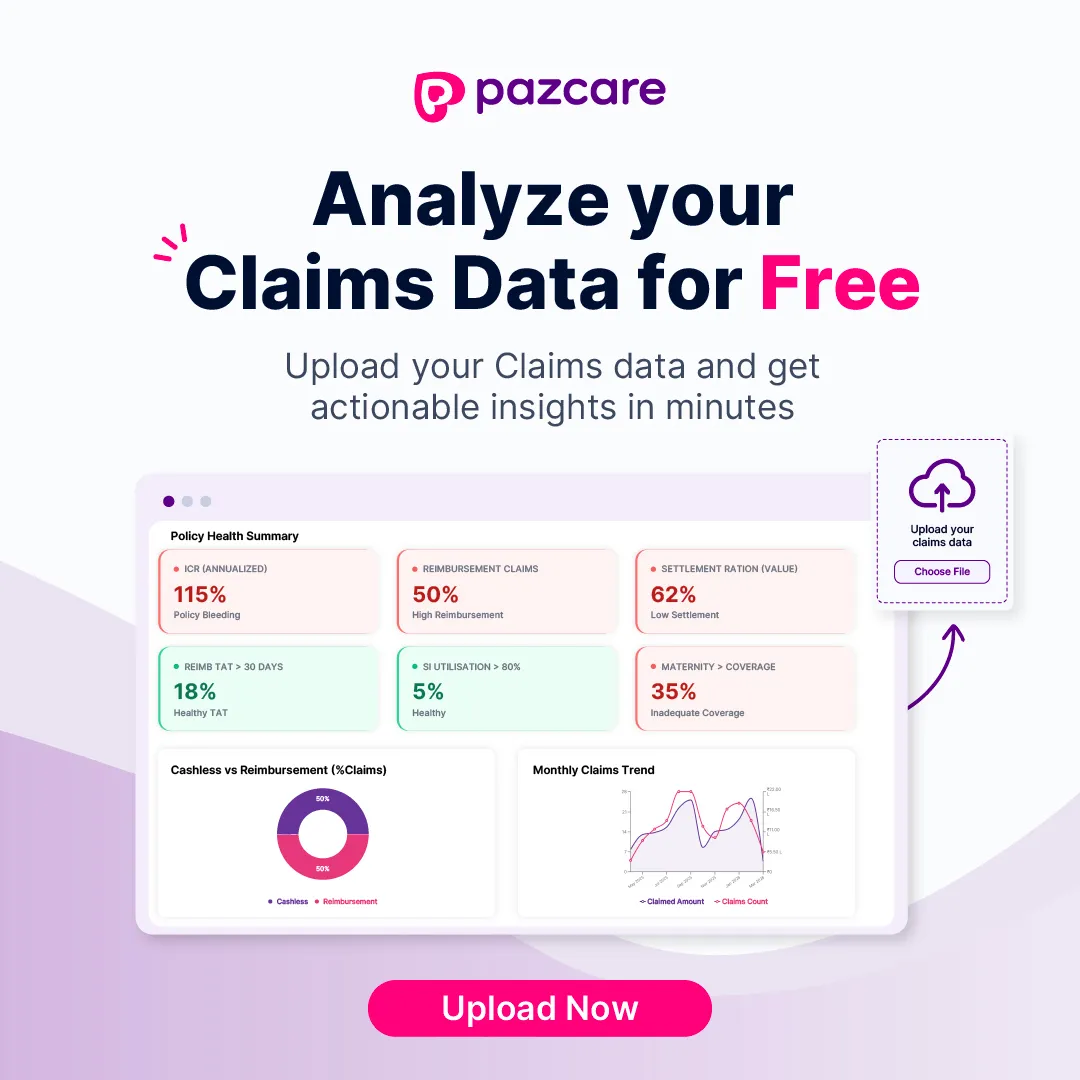
Instead of relying only on insurer reports, employers can now analyze their own claims data before renewals with ClaimIQ by Pazcare.
ClaimIQ is a claims analytics platform built for HR and finance teams managing group health insurance. It helps employers understand:
HRs also look for
Plan employee benefits with our experts
That fit your budget and expectations

Best pricing for you.
Best claim support for your team.

AICPA SOC 2
.svg)
ISO 27001
.svg)
ISNP
App for employees