How HR can spot a group health insurance plan that’s falling behind
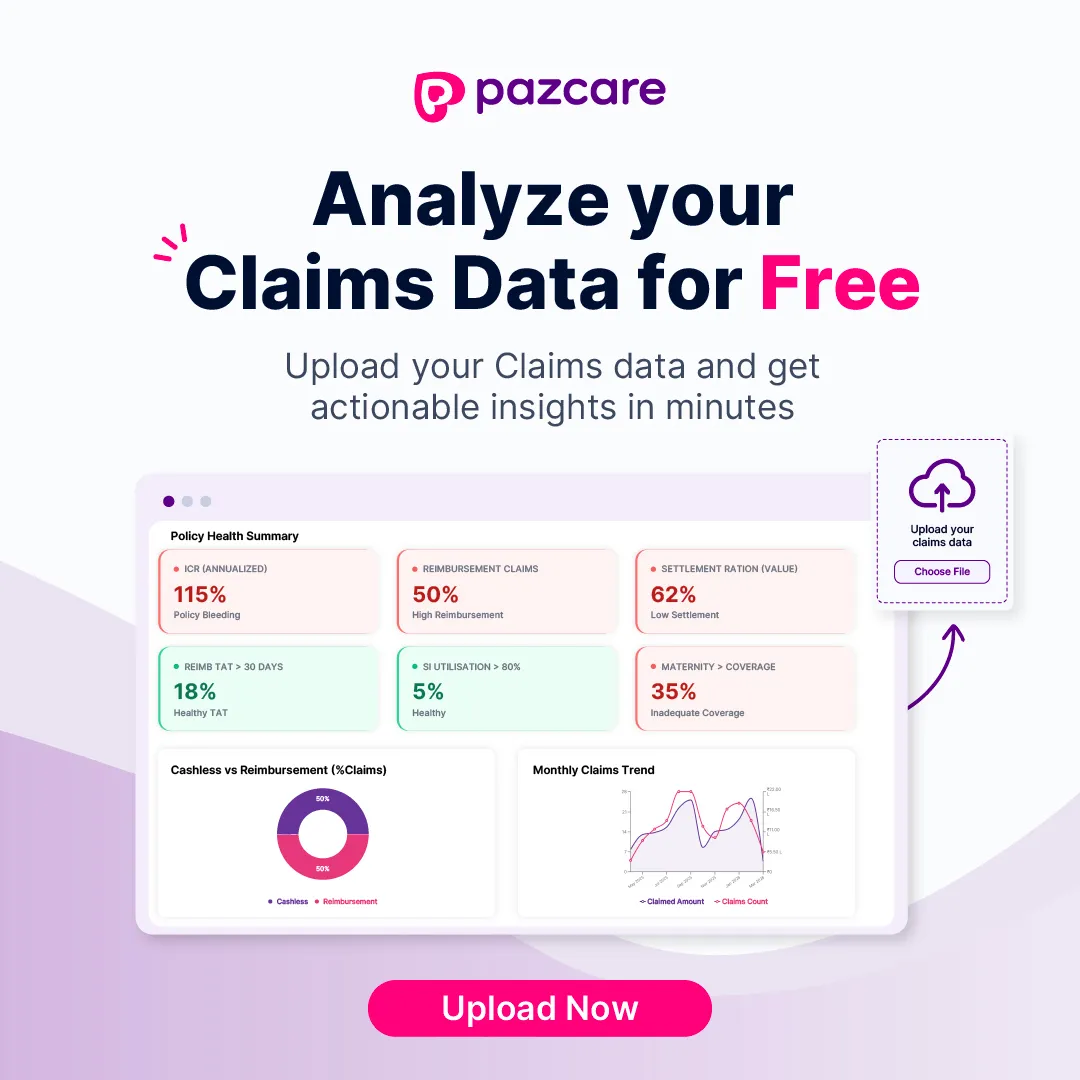
Many companies do not realize how out of date their group health insurance is until their employees start seeing the gaps. This guide will help HR to identify these gaps earlier, learn what the current workforce expects, and evaluate their policy using a data-driven checklist.
Healthcare costs have been rising in India for the past several years. Medical inflation is currently running at about 14% per year which puts India close to the highest levels of medical inflation for the country when compared with Asia. A recent survey conducted regarding health insurance claims nationally during the financial year 2023-24 revealed that the average amount that was claimed increased from ₹62,548 in 2022 to ₹70,558 in 2023.
Over 62% of the total cost of healthcare is still the responsibility of employees. Consequently, if there is a gap in the Employer's Health Insurance coverage, there will be additional financial pressure placed on the Employer.
Despite these findings many companies continue to renew their traditional Group Health Insurance policies without determining whether or not the coverage is adequate and appropriate for the current workforce. As a result, the workforce has expressed dissatisfaction with their Health Insurance plans compared to what they expected, including increased expectations for claim processing time, mentally healthy employees, and other non-hospitalizing benefits.
That’s why reevaluating group health insurance isn’t just a renewal task anymore. It’s becoming a key part of building a resilient, future-ready employee benefits strategy.
Why is group health insurance policy becoming critical now?
Modern workforce health risks look very different from a decade ago.
Key shifts:
New health patterns
Younger employees are experiencing lifestyle changes that have increased their health-related risks and subsequent claims against their employer's health plan. Due to their age, they require additional enhanced benefits, including OPD, mental health and preventive care (benefits that they are actively looking for).
Younger workforce at risk
The increase in sedentary work from hours spent on laptops, remote work routines, etc., has resulted in increased levels of back pain, migraines and burnout in employees. This has resulted in employees no longer wanting coverage for hospital services only and looking for coverage that addresses more everyday health care needs.
Lifestyle shifts
Increased screen time, a sedentary lifestyle, and a surge of remote work have led to more back issues, migraines, and burnout. The rising demand for diversity in health needs means that an employee who has a hospitalization-only plan is no longer feasible.
Regulatory trends
The new guidelines from the IRDAI are promoting an environment where insurers and employers provide a more transparent, consistent, and customer-oriented policy structure. Insurers and employers who continue to offer outdated plans will not be compliant with the new regulations or be able to provide the level of service expected by customers.
Why group health insurance matters:
- It shields employees from sudden financial shocks.
Group health insurance may also save employees anywhere from 70-90% of their OOP (out-of-pocket) healthcare expenditures, and thus provide money for future emergencies (an emergency fund). - It builds genuine trust in the organization.
Health coverage shows employees a company cares about their long-term health, not just what they're going to get out of it today. Many people also find the emotional attachment to their health benefits greater than salary increases.
- It directly strengthens employer branding.
According to surveys, when looking for job offers, most candidates indicated that health insurance is in the top three benefits they're searching for in a job offer. Having a modern health policy gives your company a competitive advantage in the marketplace with or without competing on salary.
The cost of poor workforce health
- Productivity
Many employees experience slower production, difficulty concentrating and decreased daily production due to health conditions that are untreated.
- Absenteeism
Sick days are more frequent than ever (most often caused by preventable illnesses), creating an interruption in the flow of a team and increasing the burden on their fellow team members.
- Healthcare costs
As medical inflation rises, employers are continuously faced with increased claim amounts, premiums, and out-of-pocket expenses due to updated coverage.
- Retention
When employers fail to provide adequate support, employees are significantly more likely to experience financial hardship from medical bills, leading them to seek employment elsewhere.
- Workforce stability
Employees' health risks that have not been addressed contribute to burnout, high attrition rates, and an unstable pipeline of younger talent.
- Employer branding
An employer's weak or outdated health policy causes potential employees to perceive the employer's health policies as lacking in priority; consequently, this can negatively affect the brand and hiring image.
How HR can evaluate and upgrade their policy
Step 1: Identify employee needs
By conducting an annual check of what employees actually utilize in regard to health & benefits e.g. that's OPD, Mental Health, Parental Cover, Chronic Care, Preventive Support.
Step 2: Evaluate current coverage
Through evaluating items such as Room-Rent Limits, Maternity Benefits, Exclusions, Waiting Periods, Sub-Limits. This is where you usually see the majority of your gaps.
Step 3: Benchmark against market standards
To know how your company's plan compares against similar companies' mental health, OPD, Preventive Care, Claims Support, etc.
Step 4: Upgrade key benefits
By increasing limits where necessary (add a higher limit for parental cover), include mental health & basic OPD support, have wide access to cashless hospitals.
Step 5: Track outcomes & iterate
Using claims data, claim usage, & claim satisfaction to analyze, make any adjustments, and ensure you are not offering yesterday's plans again.
What employees need today from their group health insurance
The workforce has shifted, and therefore benefit expectations are shifting as well. Younger generations such as Gen Z and younger millennials want to know that health insurance covers more than just hospitalization; they want health coverage that relates to their everyday life.
Here’s what they look for:
Personalized Benefits – Patients want to have options such as OPD, Dental, Vision, Mental Health, Parental Care, etc., instead of being limited to a one-size-fits-all plan.
Preventive Care Support – Annual check-ups, wellness screenings, nutrition/fitness programs, and early detection services, such as mammograms and prostate examinations, among others.
Greater Access to Mental Health Services - Patients also want to have access to Therapy Sessions, Stress Management Tools, and Mental Health Coverage that extends beyond a token Employee Assistance Program (EAP).
Transparent and Simplified Benefits – Patients want to understand what their benefits cover and the limits of coverage, including fewer surprises and exclusions from their policies.
Fast and Digital Claims Processing - App-based claims submissions and real-time updates on where and how to file claims, with quick reimbursement.
Family-Centric Benefits - As more companies recognize that employees want benefits for parental care, maternity leave, and elder care.
The emergence of these demands indicates that employees want benefits throughout-the-year, not just at the time of an emergency. HR Teams that meet the demands of younger generations will build stronger trusting employee relationships and improved retention.
Case study
The Challenge
A company had increasing absenteeism, dissatisfaction, and health costs due to an outdated health policy and limited wellness programs. Employee productivity and morale were affected by frequent stress-related issues, preventable illnesses, and rising absenteeism due employees being ill.
The Solution
The company completely overhauled its wellness program, implementing:
- Mental health support, preventive screenings, and annual health checks
- Support for lifestyle changes (fitness programs, stress management, institutional support for wellness) in addition to hospitalization coverage.
- Increased accessibility, transparency, and communication regarding employee benefit information so employees would know what they covered and how to file for those benefits.
The Result
As a result of the new wellness program, there was:
- Significant decreases in absenteeism and health-related interruptions at work.
- Reduction in total insurance claims/healthcare costs over time, as a result of preventive care and wellness efforts reducing major illnesses and thus the need for hospital care.
- Increased engagement and satisfaction among employees; as a result, employees believed the company cares about them and were retained, and morale was higher.
Final takeaway:
Outdated group health insurance doesn’t just affect claims; it affects your workforce. Updating your policy now protects employee health, strengthens retention, and prepares your organization for the needs of the future.
Ready to upgrade your group health insurance?
At Pazcare, we help HR teams design modern, flexible, and data-driven health insurance plans that employees actually value.
From OPD and mental health coverage to seamless claims and real-time insights—we make your benefits work for today’s workforce.
Book a free consultation with Pazcare today and build a health plan your employees will truly appreciate.







.svg)
.svg)