If you manage a group health insurance policy in India and have employees complaining of back pain, knee stiffness, or repetitive strain, you've probably wondered: Does your group health insurance plan actually cover physiotherapy visits?
The short answer: Yes, Most group health insurance plans cover physiotherapy as a post-hospitalization benefit.
If you manage a group health insurance policy in India and have employees complaining of back pain, knee stiffness, or repetitive strain, you've probably wondered: Does your group health insurance plan actually cover physiotherapy visits?
The short answer: Yes, Most group health insurance plans cover physiotherapy as a post-hospitalization benefit.
What is the musculoskeletal system?
The musculoskeletal system is the structural foundation of the human body. It encompasses bones, joints, muscles, tendons, ligaments, and the spine,everything that holds the body together and enables movement. When this system starts breaking down, it rarely happens suddenly. Deterioration builds over months and years through bad posture, repetitive strain, prolonged sitting, and insufficient movement.
In a workplace context, the musculoskeletal system is both the most commonly affected body system and the least visible in claims data because most problems are managed outside the hospital for years before reaching a severity that requires intervention.
What does the musculoskeletal system include?
Bones (the skeletal frame), joints (connecting bones and enabling motion), muscles (generating movement), tendons (attaching muscles to bones), ligaments (connecting bones to each other), cartilage (cushioning joint surfaces), and the spine (supporting the entire structure and protecting the nervous system).
Understanding what the musculoskeletal system is, makes the scale of the problem clearer. When bones degenerate, cartilage wears down, tendons inflame, and spinal discs herniate these are not isolated events. They are failures of an interconnected system that your employees rely on every hour of the working day. That is why musculoskeletal conditions have become the most invisible, most widespread, and fastest-growing health cost in Indian workplaces and why early intervention like physiotherapy matters so much.
Why physiotherapy matters for group health insurance
Musculoskeletal (MSK) conditions are the most invisible, most widespread, and fastest-growing health cost in Indian workplaces today. Yet they are also the most preventable, if caught early through the right interventions, like physiotherapy.
76%of Indian workers experience an musculoskeletal disorder in any given year (ICMR, 2024)
5.8×growth in musculoskeletal hospitalization claims — fastest-growing category
38% of all musculoskeletal claims are for joint disorders — the most expensive condition type
A 2024 ICMR meta-analysis pooling 64 studies across Indian workers found that among desk-based employees, 32% report lower back pain, 31% report neck pain, and 19% report shoulder pain. These are not hospitalization events, they are people working through pain every day, and they never make it into your claims data.
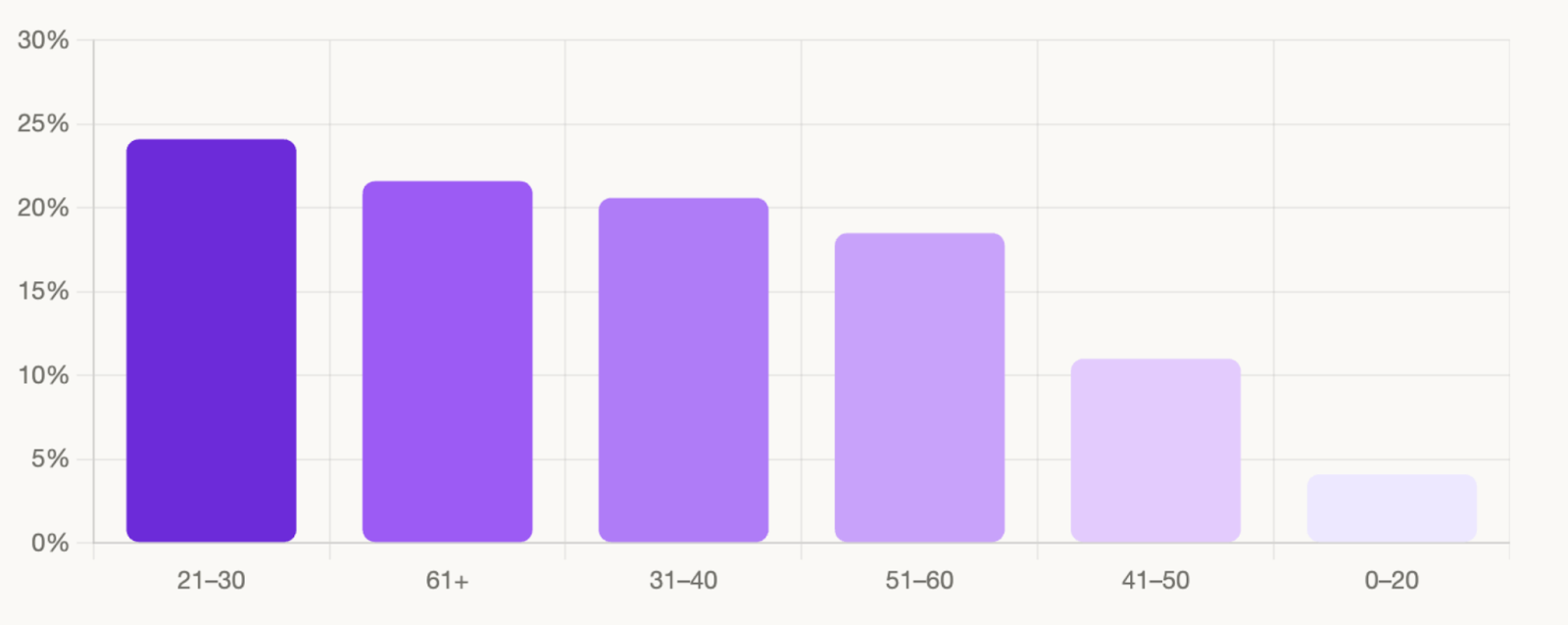
Musculoskeletal hospitalization claims by age group
Is physiotherapy covered under group health insurance in India?
Coverage varies significantly by insurer and policy type. Here's the landscape most HR teams encounter:
Coverage Type
Description
Typical Group Health Insurance
Enhanced Group Plan
Post-hospitalization physiotherapy
Within 60–90 days of discharge
Covered
Covered
Outpatient (OPD) physiotherapy
Walk-in visits without hospitalisation
Not covered
Add-on only
Preventive physiotherapy
Ergonomic / wellness sessions
Not covered
Rare add-on
Domiciliary physiotherapy
Home visits for mobility-limited patients
Varies
Varies
Pre-authorization required
Usually yes
Sometimes waived
Key insight: The most impactful physiotherapy early intervention at first sign of pain is almost never covered under standard group health insurance plans. Most policies only activate physiotherapy benefits after a hospitalization event, by which point the condition has often progressed significantly.
What does a group health insurance plan typically cover for musculoskeletal conditions?
Standard group insurance for employees covers the hospitalisation end of the musculoskeletal spectrum, the most expensive events. Here's what is included:
Joint replacement surgery (knee, hip) — Typically covered. This is the single highest-cost MSK event.
Spine surgery (disc herniation, laminectomy) — Typically covered with a waiting period
Post-surgical rehabilitation physiotherapy — Usually covered for 60–90 days post-discharge
Fracture treatment and orthopaedic care — Covered as standard hospitalisation
Domiciliary physiotherapy — Sometimes covered when mobility is severely restricted
How musculoskeletal claims are driving group health insurance costs
Understanding the data behind musculoskeletal claims is essential for any HR professional designing or renewing a group health insurance cover.
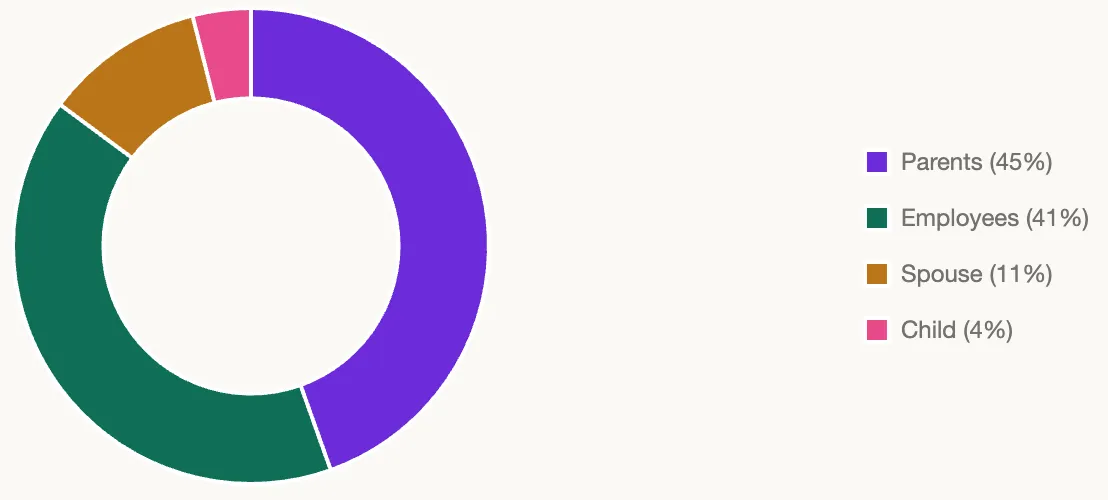
Claims split: who is generating musculoskeletal costs?
Musculoskeletal claims are split nearly evenly between parents (45%) and employees (41%).
Condition breakdown
Condition
Claims Share
What it Means in Practice
Joint disorders
38%
Knee degeneration, hip problems, joint damage leads to replacement surgery
Dorsopathies (spinal disorders)
26%
Slipped discs, chronic back pain, spine problems requiring surgery
Soft tissue disorders
18%
Tendinitis, bursitis, muscle strains, desk and repetitive work injuries
Bone density disorders
7%
Osteoporosis and bone fragility, higher risk of fractures in parents
Other
11%
Other osteopathies, connective tissue, miscellaneous
Soft tissue disorders (18% of claims) are the most preventable. Tendinitis and muscle strains caused by desk work and repetitive strain are classic candidates for early physiotherapy intervention, the type that falls outside standard group health insurance cover.
Everything in this guide draws from Pazcare's 128-page analysis of real employee health claims across Indian companies.
What HRs can do: Building better physiotherapy coverage into group health insurance
1. Offer early physiotherapy access as a group health insurance benefit
Physiotherapy at first pain is far cheaper and more effective than surgery after years of damage. Consider covering physiotherapy sessions as part of the employee health benefit, not just post-surgery rehabilitation. Many insurers offer this as an OPD add-on to a group health insurance plan.
2. Invest in ergonomic assessments for desk-based employees
Prolonged sitting, bad posture and poor desk setup are the primary drivers of spinal problems in the 21–40 age band, the group generating 44.7% of all musculoskeletal claims. A one-time ergonomic assessment per employee costs very little compared to a spinal surgery claim years later. This applies to both office and work-from-home setups.
3. Build preferred hospital networks for joint replacement surgery
Joint replacement is the most expensive and common procedure in the musculoskeletal category. Pre-negotiated partnerships with hospitals that follow standardised protocols can significantly reduce cost per procedure. This is particularly relevant for parent claims, where volumes are high enough to negotiate rates.
4. Connect musculoskeletal and injury prevention programmes
An employee or parent with an untreated back or knee problem is more likely to fall and get injured. Fall prevention (especially for parents) and workplace injury prevention should reference musculoskeletal health as the upstream risk factor.
5. Track the invisible signals
Don't ignore employee pain complaints just because they don't become claims. Track outpatient physiotherapy visits, painkiller prescriptions, and sick leave patterns for early warning signs. The employee who takes painkillers every day and never complains is a future injury or surgery claim.
55–70 Age range where parent joint and spine problems accelerate — plan for this in your group health insurance renewal
44.7% of musculoskeletal claims come from 21–40 year olds — your productive workforce
24.1% of all musculoskeletalclaims are in the 21–30 age band alone — a desk-worker problem
Find out what the right group health insurance plan looks like for your team
Every workforce is different, employee count, age mix, parent cover, OPD needs. Get a quote tailored to your organization, with guidance from a benefits expert who understands the data behind musculoskeletal and employee health costs.
Palak is passionate about driving conversations around employee health, wellness, and HR trends. With experience in content and growth strategy, her insights have been published in leading platforms, including The Times of India. Through her writing, she shows how small shifts in employee benefits can create lasting impact on workplace health and productivity.
Follow on:
Thanks for subscribing! If it’s your first time, check your inbox. Otherwise, you’re already on our list
Oops! Something went wrong while submitting the form.
Ready to give yourself and your team the best employee benefit experience?
Is OPD physiotherapy covered under group health insurance?
Not by default. Standard group health insurance plans in India do not include OPD physiotherapy as a base benefit. It is available only as an add-on rider at an additional premium. Without this add-on, physiotherapy is covered only after a related hospitalization meaning an employee with chronic back pain or a stiff knee cannot claim physiotherapy visits unless they have first been admitted to a hospital for that condition.
What is the difference between post-hospitalisation physiotherapy and OPD physiotherapy cover?
Post-hospitalization physiotherapy is covered after a surgical procedure or hospitalisation event for example, after a knee replacement or spinal surgery. It typically runs for 60 to 90 days from the date of discharge, with a defined reimbursement sub-limit. OPD physiotherapy cover is different: it allows an employee or covered dependent to visit a physiotherapist directly, without any prior hospitalization, at the first sign of pain or stiffness. OPD cover is where the preventive value sits, most musculoskeletal conditions are reversible if treated early, long before they reach the stage of requiring surgery.
Does group health insurance cover physiotherapy without hospitalization in India?
Generally no. Most group health insurance policies in India restrict physiotherapy benefits to post-hospitalisation scenarios. An employee managing back pain, neck stiffness, or a soft tissue injury outside a hospital setting cannot claim physiotherapy reimbursement under a standard plan. Some insurers offer OPD riders that cover outpatient physiotherapy, typically 10 to 20 sessions per covered individual per year, but this is an optional add-on and not included in base group plans.
Can parents covered under group health insurance claim physiotherapy benefits?
Yes, under the same terms as employees. If a group health insurance policy covers post-hospitalization physiotherapy, that benefit applies to parents as well. For example, if a parent undergoes knee replacement surgery, post-surgical physiotherapy would be claimable within the allowed window.










.svg)
.svg)