Should you have individual insurance if your company is already offering you group insurance?
Explore the differences between group and individual health insurance, their benefits, limitations, and whether you need a personal policy.
Pazcare Team
Team Pazcare
This is some text inside of a div block.
Updated on:
June 8, 2026
Share
Table of Contents
Quick Answer
Group health insurance provides immediate coverage and often covers pre-existing diseases from Day 1, making it a valuable employee benefit.
Individual health insurance offers long-term protection that remains active even if you switch jobs, retire, or lose employer-sponsored coverage.
Group health insurance may not always be sufficient, especially for employees with dependents, aging parents, or higher healthcare needs.
Having both group and individual health insurance can create a stronger financial safety net, helping you manage rising healthcare costs and large medical expenses.
Super top-up plans can be a cost-effective alternative for those looking to increase coverage without purchasing a separate comprehensive policy.
The right choice depends on your life stage, family responsibilities, existing coverage, and future healthcare need
Group health insurance provides immediate coverage and often covers pre-existing diseases from Day 1, making it a valuable employee benefit.
Individual health insurance offers long-term protection that remains active even if you switch jobs, retire, or lose employer-sponsored coverage.
Group health insurance may not always be sufficient, especially for employees with dependents, aging parents, or higher healthcare needs.
Having both group and individual health insurance can create a stronger financial safety net, helping you manage rising healthcare costs and large medical expenses.
Super top-up plans can be a cost-effective alternative for those looking to increase coverage without purchasing a separate comprehensive policy.
The right choice depends on your life stage, family responsibilities, existing coverage, and future healthcare need
Your employer provides a ₹5 lakh group health insurance policy. At first glance, it feels like enough protection. But what happens if you switch jobs, get laid off, retire, or face a medical emergency that exceeds your corporate coverage?
This is why many employees wonder whether they should buy an individual health insurance policy even when they're already covered by a group plan.
The answer depends on your age, family situation, health risks, and financial goals.
What shocked us was that 40% of us didn’t have any insurance and were hoping everything would be fine ‘forever’. In our previous blog, we discussed how group health insurance and individual health insurance are different yet alike. But let's address the elephant in the room- should you have individual insurance if your company is already offering you corporate group insurance?
Why do some Indians still insist on individual health insurance?
With extensive coverage, a simpler claim process, low costs, and multiple benefits (starting from Day 1 of enrollment), Group Health Insurance is mostly a brilliant choice for employees. However, there is a huge following for Individual Insurance among Indians. Here is why:
Tax benefits Premiums paid for individual policies qualify for tax deductions under Section 80D. While this is most useful for employees in higher tax brackets, it remains a strong motivator.
Customisation Unlike group insurance plans, In individual health insurance employees can customise the plan as per their needs
No co-payment in most cases Employees often prefer individual plans because they don’t have to do copayment.
No claim bonus (NCB) Individual insurance plans usually reward policyholders with increased coverage or reduced premiums if no claims are made during the policy year.
Flexible coverage period Employees can decide their coverage period and continue renewing policies independently, without depending on their employer.
Given the inclination towards individual health insurance plans, the employees are often left confused if they should have an individual plan if their employer has already covered them through group insurance (sometimes also known as corporate insurance) plan.
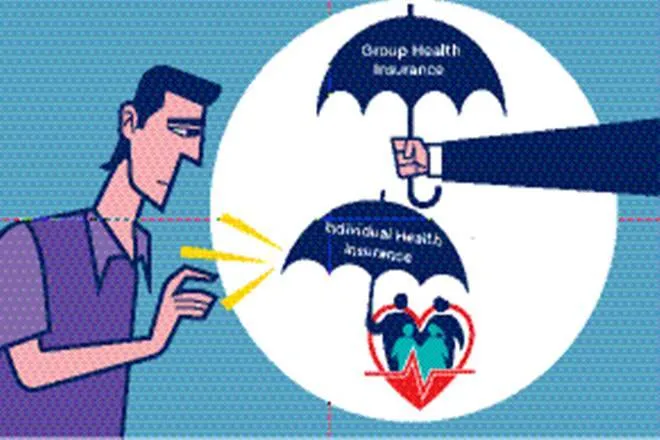
Group Health Insurance vs Individual Health Insurance
Both group health insurance and individual health insurance serve the same purpose, protecting you from unexpected medical expenses. However, they differ significantly in terms of coverage, ownership, flexibility, and long-term benefits.
Feature
Group Health Insurance
Individual Health Insurance
Premium
Fully or partially paid by the employer
Paid by the policyholder
Waiting Period
Usually waived for pre-existing diseases and maternity benefits
Typically 2–4 years for specific illnesses and pre-existing conditions
Coverage Start Date
Begins from the date of enrolment
Starts after policy issuance and applicable waiting periods
Job Dependency
Linked to your employment
Remains active regardless of your employment status
Sum Insured
Fixed by the employer
Chosen by the policyholder
Customisation
Limited plan flexibility
Can be customized with riders and add-ons
Coverage Continuity
Ends when you leave the company
Continues as long as premiums are paid
Family Coverage
Depends on employer policy
Can be tailored for self, spouse, children, and parents
No Claim Bonus
Rarely available
Usually offered as increased coverage or premium benefits
Which one is better?
The answer depends on your needs.
Group health insurance is often an excellent first layer of protection because it provides immediate coverage, covers pre-existing conditions from Day 1 in many cases, and comes at little or no cost to employees. However, it is tied to your job and may not offer sufficient coverage for long-term healthcare needs.
Individual health insurance, on the other hand, provides lifelong protection, greater flexibility, and continuity even when you switch jobs or retire. It also allows you to build a higher sum insured over time through no-claim bonuses and policy upgrades.
For many employees, the ideal approach is not choosing one over the other but using both together. A group health insurance policy can handle immediate healthcare needs, while an individual policy acts as a long-term safety net that stays with you throughout your life.
5 Reasons you should have group insurance as well as individual insurance
Companies have come a long way from being mere authoritative set-ups to being highly autonomous and inclusive. This means that when candidates interview for a company, they not only look at the pay package but also consider the physical and mental well being that the new workplace will offer.
What do companies offer to step up and meet the right candidates halfway? They offer insurance! Group insurance is insurance offered by employers to their employees. The premium amount is often shared between the employer and the employees, and often covers the dependents of the employees (parents, spouse, and children) against medical expenses. Here are our top 5 reasons you should have group insurance as well as individual insurance:
1. Post-retirement benefits:
While group insurance expires after the employees leave their employer or retire, individual insurance stays with them for as long as they want.
2. Expanded cover:
Group insurance offers coverage against all the common health issues including the annual medical check-up. Individual insurance on the other hand is comprehensive and customised as per your specific needs. Having both can help you avail the benefits as per the treatment required.
3. Waiting period:
Group health insurance gives you full coverage from day 1 while individual insurance has a waiting period for 2-4 years for certain diseases. It is wise for employees to use group insurance stead for medical attention against these diseases. Also, there are no medical tests required for group insurance before enrollment.
4. Senior citizen health guard:
In a number of cases, group health insurance may be the only insurance for your parents (above 60 years of age). Your individual insurance can cover them while group insurance may just come in handy for their parents.
5. Rising healthcare costs:
Medical inflation in India is rising at nearly 12–15% annually. A single hospitalization can easily exceed the basic coverage offered under a group insurance plan (₹3–5 lakh on average). Having an individual policy as a backup ensures you have a higher sum insured and aren’t left paying large out-of-pocket expenses.
When do you not need individual insurance
Some group insurance plans are so well chalked out, that one might just not need an individual plan at all.
1. Portable group health insurance:
Group health insurance can be ported. This allows you to transfer your group insurance to an individual cover for rider benefits at an extra cost at the time of leaving the company. This can help to improve employer branding. Additionally, the waiting period of 30 days is waived off. Sounds like a charmer to us!
2. Added coverage and benefits:
Employers often cover accidental liability and employee travel (if the job role requires domestic/international travel) in group insurance. Employers have even started to provide wellness benefits; giving easy and secure access to the well-being of professionals. In such cases, individual insurance will not add much value to your employees.
3. When you have super top-up plans
If you’ve already purchased a super top-up policy along with your group cover, this can act as a cost-effective alternative to an individual plan in the short term.
So, should you have individual insurance if your company is already offering you group insurance?
At the end of the day, insurance is an individual’s personal choice. If your company is already offering group insurance to you, most of your family’s healthcare needs are taken care of. However, individual insurance can be more comprehensive and may provide an extra blanket in unforeseen circumstances. Buying individual insurance is worth it as long as it is covering your and your dependents especially when the group insurance ceases to exist (post-retirement or after voluntary exit from employment).So you should buy it if - you have some specific needs that aren’t being covered by their group insurance plan, or if you are close to their retirement and their group healthcare plan will no longer be valid after retirement, or if you are planning to leave your organisation and your group insurance isn’t transferrable.Therefore, it depends on what stage of life are you in and what kind of cover are you looking for.
How can Pazcare help?
Pazcare, a healthcare concierge company helps employers choose the right group healthcare plan for their employees. We offer a dashboard for employers to track and manage the health insurance of their employees in real-time. We also offer an app for employees to manage their insurance end-to-end. While buying individual insurance is your employees' choice, Pazcare can help you to zero in on the group insurance plan that will ensure the physical and mental well being of your employees. Talk to Pazcare today
Key takeaways
Blog sources
About the Author
Follow on:
Thanks for subscribing! If it’s your first time, check your inbox. Otherwise, you’re already on our list
Oops! Something went wrong while submitting the form.
Ready to give yourself and your team the best employee benefit experience?
Is group insurance better than individual insurance?
Both has its own benefits. Group insurance is generally paid by the employer and indiviadual insurance is paid by you. Hence, being in a company that offers group insurance is better. However, you individual insurance is in your control and group is not. With individual insurance, you can choose what you want.
What is the difference between GMC and individual health insurance?
The organization purchases GMC or Group Medical Cover for the employees. The premiums are cheaper due to group coverage. The employees can include their spouse, children and parents/parents-in-law based on the policy type. Individual health insurance covers only the policyholder and has higher premiums than GMC. GMC policy covers pre-existing disease and maternity costs without the addition of a rider.
How are the exclusions in group policies different from individual policies?
Group health insurance often has fewer exclusions compared to individual plans. For example, most group policies have zero waiting periods for pre-existing diseases and may cover maternity benefits, while individual plans usually have longer waiting periods and stricter exclusions.
If someone has individual health insurance cover, can he/she also be included in group health insurance?
Yes, even if your employees have an individual insurance policy, they can still be eligible for group health insurance provided by their employer.
Is there GST on individual health insurance now?
No, GST has been removed. You only pay the base premium for individual and family health insurance plans.
Is age-band pricing used in individual health insurance?
Age-band pricing is more common in group health insurance. Individual health insurance usually calculates premiums based on exact age.










.svg)
.svg)