HR teams today are doing far more than hiring and payroll management. Modern enterprise HR leaders are expected to manage employee wellbeing, insurance operations, engagement initiatives, compliance requirements, and employee experience all while supporting business growth. But as organizations scale, HR operations become increasingly complex.
Managing employee benefits across multiple locations, coordinating with different vendors, handling insurance claims, ensuring compliance, and improving employee satisfaction often creates operational overload for HR teams. This is where integrated employee benefits platforms like Pazcare are changing how enterprises manage HR operations. Instead of juggling multiple vendors, spreadsheets, emails, and disconnected systems, enterprises can centralize employee insurance, wellness, and benefits management through a single platform.
The growing complexity of enterprise HR operations
As companies grow, HR operations become more layered and difficult to manage. What once worked for a 50-member startup may completely fail for a 1,000+ employee enterprise spread across different cities and work models.
Today’s enterprise HR teams manage:
- Employee insurance and benefits
- Corporate wellness programs
- Claims support
- Employee engagement programs
- Compliance requirements
- Vendor coordination
- Employee queries and support
At the same time, employee expectations have changed. Employees now expect:
- Faster support
- Digital-first HR experiences
- Transparent communication
- Better healthcare access
- Personalized benefits
Without the right systems in place, HR teams often end up spending more time on operations than on strategic people initiatives.
The biggest HR operational challenges enterprises face
1. Managing multiple vendors
One of the biggest operational challenges for enterprises is vendor fragmentation.
Many companies use separate vendors for:
- Group health insurance
- Wellness initiatives
- Employee engagement
- Health checkups
- Claims support
- Reimbursements
- Flexible benefits
This creates communication gaps, delays in employee support, inconsistent experiences and lack of centralized visibility. HR teams often become the bridge between employees and multiple service providers, increasing administrative burden significantly.
2. Time-consuming manual processes
Even in 2026, many enterprise HR teams still rely heavily on spreadsheets, emails, and manual coordination.
Common manual HR operations include employee onboarding into insurance policies, policy additions and deletions, updating employee records, managing dependent information, tracking claims and approval workflows. Manual operations increase human errors, processing delays, operational inefficiencies and employee dissatisfaction.
3. Employee experience issues
Employees today expect workplace benefits to be simple, accessible, and transparent.
Many employees struggle with understanding their employee insurance coverage, accessing claim support, using wellness benefits, finding policy information and getting quick HR responses. When employees face delays during medical emergencies or claims, frustration rises quickly.
4. Rising healthcare costs
Healthcare inflation continues to impact enterprises across India. Organizations are seeing increasing group health insurance premiums, higher hospitalization costs and poor preventive healthcare adoption.
Without proactive healthcare and wellness initiatives, insurance costs can increase significantly during renewals. This is pushing enterprises to rethink how they manage employee health benefits.
What does Pazcare cover?
Pazcare helps enterprises streamline employee benefits and insurance operations through a centralized platform. Core areas include:
- Group health insurance
- Claims support
- Wellness programs
- Preventive healthcare
- Health checkups
- Flexible employee benefits
- Employee engagement initiatives
- Insurance administration support
Instead of managing disconnected systems and vendors, enterprises can simplify operations through a single integrated platform.
How Pazcare simplifies HR operations for enterprises
1. Centralized employee benefits management
Most enterprises struggle with:
- Multiple insurance providers
- Scattered employee records
- Disconnected communication channels
- Poor visibility into employee benefits usage
This creates confusion for both HR teams and employees.
How Pazcare Helps
Pazcare centralizes employee benefits management through a unified dashboard where HR teams can manage:
- Employee insurance
- Policy updates
- Benefit communication
- Enrollment workflows
With centralized management, enterprises can:
- Reduce administrative workload
- Improve operational visibility
- Eliminate repetitive manual tasks
- Improve employee servicing speed
2. Seamless employee insurance administration
Insurance administration is often one of the most operationally heavy HR functions.
HR teams usually spend hours handling:
- New employee enrollments
- Policy changes
- Dependent additions
- Coverage updates
- Insurance coordination
Pazcare automates several administrative processes including:
- Employee enrollment
- Policy additions and deletions
- Dependent management
- Digital insurance card access
Employees can access insurance information more easily without relying heavily on HR for basic support.
3. Faster claims support & resolution
Claims support is one of the biggest pain points for HR teams.
During hospitalization or emergencies, employees often approach HR repeatedly for:
- Claim status updates
- Documentation support
- Cashless approval assistance
- Escalations
This creates pressure on HR teams during already stressful situations.
How Pazcare Helps
Pazcare provides:
- Paz Claims AI
- Dedicated claims support
- Employee assistance during hospitalization
- Faster query resolution
- Claims tracking support
This reduces dependency on HR for every claim-related issue.
4. Wellness & Preventive Healthcare Integration
Organizations are increasingly investing in preventive healthcare and employee wellbeing. Burnout, stress, and lifestyle-related illnesses are rising across workplaces.
Pazcare supports enterprises through:
- Health camps
- Preventive health checkups
- Mental wellness initiatives
- Fitness and wellbeing programs
These initiatives help organizations move from reactive healthcare to proactive employee wellbeing.
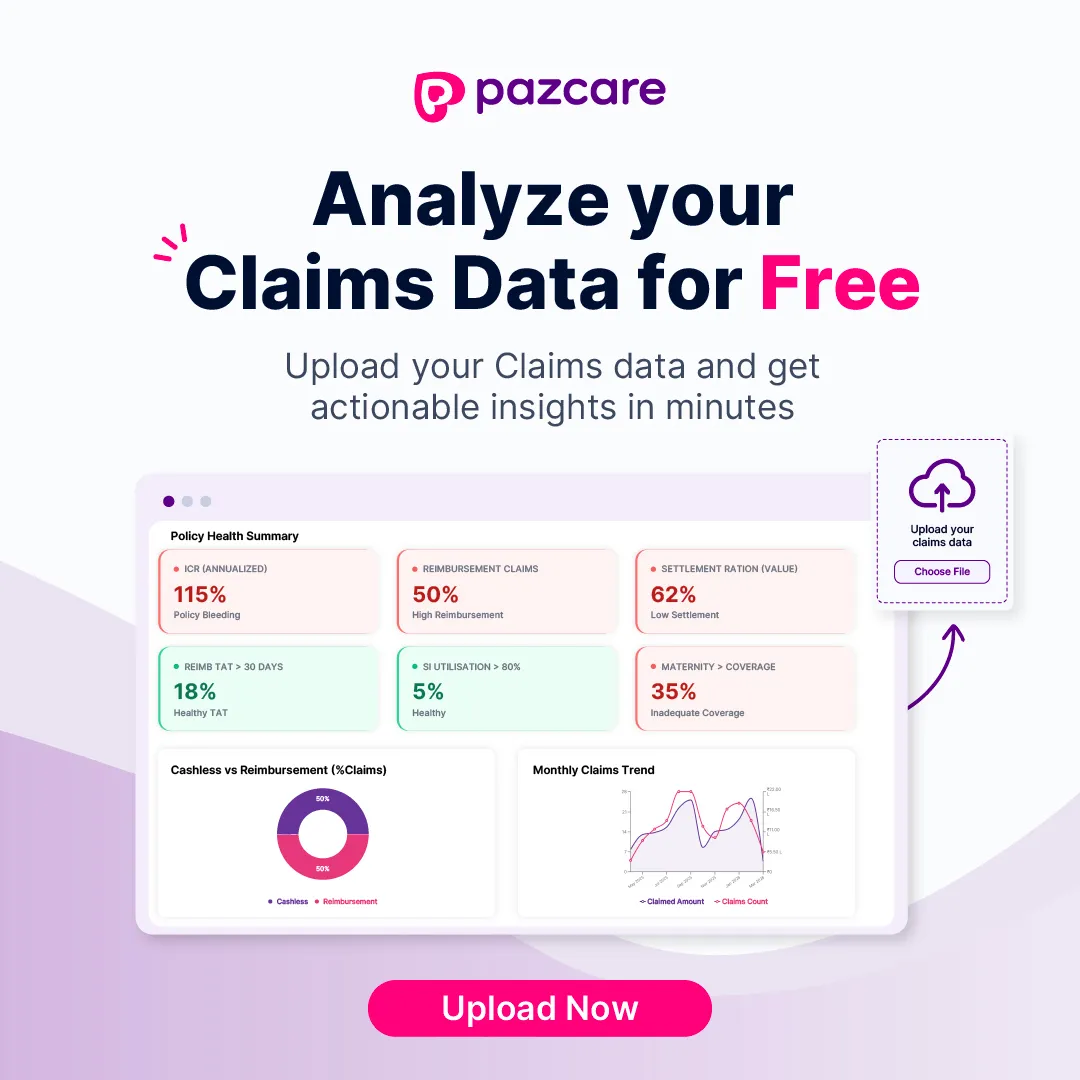
5. Data & Analytics for HR Teams
Modern HR decisions require better visibility into employee benefits data.
HR leaders increasingly want visibility into:
- Policy utilization
- Claims trends
- Employee engagement levels
- Wellness participation
- Benefits adoption
Without centralized data, making strategic decisions becomes difficult.
How Pazcare Helps
Pazcare offers centralized reporting and operational insights that help HR teams:
- Track benefits usage
- Analyze claims patterns
- Improve renewal planning
- Optimize benefits spending
Why enterprises prefer integrated HR benefits platforms
Many enterprises are moving away from fragmented systems toward integrated HR operations platforms because they offer:
- Reduced administrative burden
- Better scalability
- Improved employee experience
- Faster operational workflows
- Stronger compliance management
- Better cost optimization
- Centralized employee support
As enterprise workforces become more distributed and hybrid, centralized HR operations become even more critical.
Conclusion
Enterprise HR teams today are expected to improve employee experience, manage healthcare costs, support wellbeing, and scale operations efficiently all at the same time. But managing multiple vendors, manual workflows, insurance operations, and employee support through disconnected systems creates operational inefficiencies.
This is why enterprises are increasingly adopting integrated employee benefits platforms like Pazcare.
Pazcare helps enterprises reduce HR workload while improving employee satisfaction and operational efficiency. For enterprises looking to build scalable, employee-friendly HR systems, centralized benefits management is becoming a business necessity rather than just an HR upgrade.









.svg)
.svg)